


Which EV fast-charges better for road trips around Reading, PA — the 2026 Chevrolet Equinox EV or the 2026 Hyundai IONIQ 5?
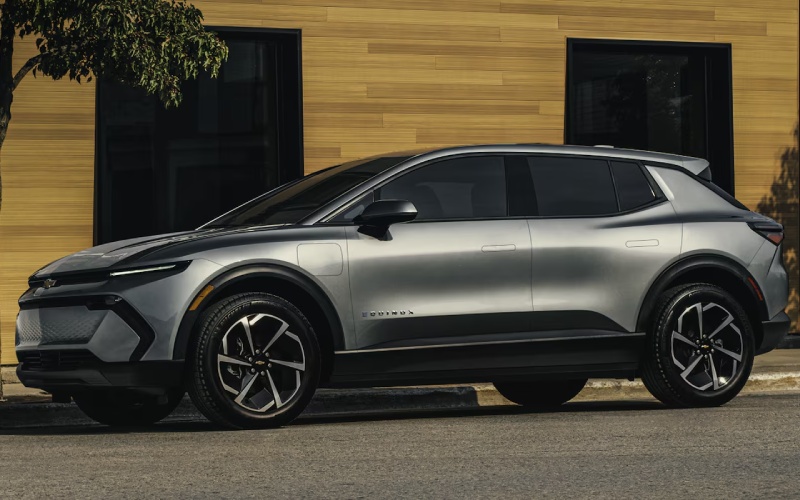
Miracle Chevrolet of Morgantown – Which EV fast-charges better for road trips around Reading, PA — the 2026 Chevrolet Equinox EV or the 2026 Hyundai IONIQ 5?
Planning a highway-heavy weekend or a multi-state run up and down the Northeast corridor raises a common question for EV shoppers: which electric SUV fast-charges better, the 2026 Chevrolet Equinox EV or the 2026 Hyundai IONIQ 5? Around Reading, PA, on-the-go practicality matters as much as at-home convenience. Both of these compact EVs deliver confident range, brisk acceleration, and quiet rides, but their charging approaches differ in ways that can shape your travel routine. Let’s unpack how each handles real-world road trips, from charger access to session speed to planning tools that reduce guesswork.
The Equinox EV makes route planning straightforward with the myChevrolet mobile app featuring Energy Assist, which integrates charger availability, routing, and payment in one place. On compatible public chargers, you will find easy access across North America, including Tesla Superchargers when you use a GM-approved NACS DC adapter. That means if you are mapping a Reading-to-Philly workday swing or a family run toward state parks, you can lean on one app to plan stops and stay flexible as conditions change. The IONIQ 5 takes a different tack with a native NACS port for direct Supercharger access and supports very quick DC sessions, going from 10 to 80 percent in as little as about 20 minutes when conditions are optimal. For many drivers, the takeaway isn’t just speed at one station type—it’s confident access to multiple networks and clear, reliable guidance en route.
How does this play out when you leave home fully topped off? The Equinox EV offers an EPA-estimated 319 miles on FWD models and an EPA-estimated 307 miles on available AWD. That range buffer helps minimize the number of DC stops on a typical Reading-to-D.C. or Reading-to-New York round trip, especially if you start the day with cabin preconditioning to preserve energy for the drive. The IONIQ 5’s EPA-estimated range of up to 318 miles (RWD) and up to 290 miles (AWD) is also road-trip capable, and its strong DC performance is a plus when you do need a session. In practice, weather, speed, and elevation changes factor in, so having smart range tools matters—Chevrolet’s energy screens and regen controls like Regen on Demand® and One Pedal Driving help you right-size efficiency without disrupting your pace.
Charger availability is the other key variable for stress-light travel. With more than 250,000 public chargers accessible through the myChevrolet app, the Equinox EV gives you broad coverage and a unified way to pay. Hyundai’s move to NACS on the 2026 IONIQ 5 opens the door to the most visible high-speed network, and the included CCS adapter helps bridge to other providers. Both strategies reduce friction, and both are getting better every quarter. As you compare, consider what you value most: an integrated ecosystem that bundles planning, access, and payment in a single app, or native NACS hardware paired with a flexibility-first approach to network choice. Your home charging setup, commute length, and typical weekend radius around Reading, PA will point you toward the best fit.
One more consideration for road-trippers is how the vehicle’s driver-assist technology eases long stints. The Equinox EV ups the comfort quotient with available Super Cruise® for compatible roads—a hands-free driver assistance feature that can reduce mental load on steady highway stretches. Hyundai counters with Highway Driving Assist 2, which supports lane centering and adaptive cruising. Both systems are designed to help, though Super Cruise®’s hands-free capability on select mapped highways often becomes a deciding factor for those who rack up regular interstate miles.
Beyond the road, think about what keeps life moving at home if the power goes out. The Equinox EV is compatible with the GM Energy PowerShift Charger and GM Energy V2H Enablement Kit to enable Vehicle-to-Home bidirectional capability for a properly equipped residence. While Hyundai’s IONIQ 5 focuses on Vehicle-to-Load outlets that power external devices and tools, the Equinox EV’s V2H pathway adds a backup-power angle that matters to some households. If outages aren’t your concern, V2L may be all you need; if home resilience is on your mind, V2H compatibility could tip the scales.
- Session speed vs. stop count: IONIQ 5’s DC fast-charging window is quick in optimal conditions; Equinox EV’s higher EPA-estimated range can reduce how often you need to stop.
- Network flexibility: Equinox EV uses the myChevrolet app and a GM-approved NACS DC adapter for Tesla Superchargers; IONIQ 5’s native NACS port adds simplicity on that network and includes a CCS adapter for others.
- Road-trip comfort: Super Cruise® on the Equinox EV enables hands-free driving on compatible roads; IONIQ 5’s Highway Driving Assist 2 supports lane centering and adaptive cruising.
So which fast-charges better for your travel pattern? If you prioritize the fewest stops and a single, integrated app to plan and pay, the Equinox EV’s range plus Energy Assist is a powerful combination. If your routine revolves around frequent short sessions on the Supercharger network and you prefer native hardware, the IONIQ 5’s approach is appealing. In both cases, at-home Level 2 charging will shoulder most daily needs, leaving DC fast charging for the moments that make trips possible.
When you are ready to compare in person, our team can help you map typical long-distance routes and match your use case to the right approach. Miracle Chevrolet of Morgantown can walk you through live route simulations, explain charger options, and show how features like One Pedal Driving, HD Surround Vision, and Super Cruise® contribute to an easier, safer journey. We are serving Reading, Pottstown, and Boyertown with straightforward guidance so you can choose the EV that fits your road-trip rhythm today—and grows with expanding infrastructure tomorrow.
Frequently Asked Questions:
How long does it take to DC fast-charge these vehicles from 10 to 80 percent?
Hyundai states the 2026 IONIQ 5 can add charge from 10 to 80 percent in as little as about 20 minutes in optimal conditions on a high-powered DC charger. The Equinox EV also supports DC fast charging on compatible stations; exact session times vary by charger power level, battery temperature, and starting state of charge.
Can both vehicles use Tesla Superchargers?
The 2026 IONIQ 5 includes a native NACS port for direct Supercharger access. The 2026 Equinox EV can access Tesla Superchargers using a GM-approved NACS DC adapter and the myChevrolet app for activation and payment on supported sites.
Which is better for home backup power?
The Equinox EV is compatible with the GM Energy PowerShift Charger and GM Energy V2H Enablement Kit for bidirectional Vehicle-to-Home capability with a properly equipped residence. The IONIQ 5 emphasizes Vehicle-to-Load outlets to power external devices and tools, which is useful off-site but not designed as a home backup system.
What about everyday charging if I do most of my driving locally?
Both SUVs work well with a 240V Level 2 home charger for daily driving. Preconditioning the cabin while plugged in and using efficiency tools like One Pedal Driving can help maximize range for errands, school runs, and commutes.
0 comment(s) so far on Which EV fast-charges better for road trips around Reading, PA — the 2026 Chevrolet Equinox EV or the 2026 Hyundai IONIQ 5?